Fully protected
Kisite, the no-take zone
The reef most dhows visit
Plan your visitYour stop on the map
Fast answer
The Wasini marine park is the Kisite Mpunguti protected area, run by the Kenya Wildlife Service, with entry fees listed by visitor type.
Park essentials
Discover 16 stops
Pick a route, then tap a marker or a stop for notes and a Google Maps link.
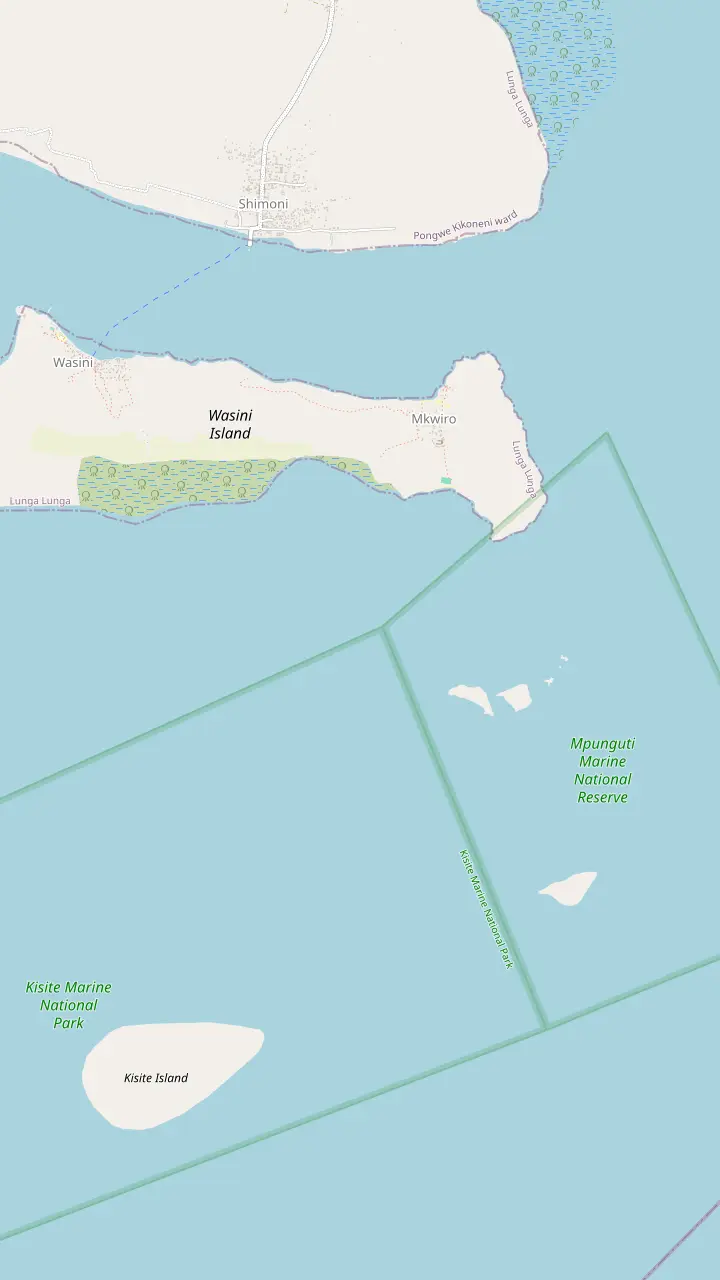
Shimoni is the fishing village on the mainland where the dhow trips board, close to the sea border with Tanzania.
Google MapsWasini is one of 4 inhabited islands in Kwale County, and the dhow day stops here for lunch and a village walk.
Google MapsMkwiro is named with Wasini as one of the twin islands that had no grid electricity before the solar mini-grid.
Google MapsThe Upper and Lower Mpunguti islands make up the second island system of the marine protected area.
Google MapsMpunguti Marine National Reserve covers 11 km2 and allows controlled artisanal fishing and low-impact tourism.
Google MapsKisite Island is the core of the fully protected park zone, 11 km off the coast at Shimoni.
Google Maps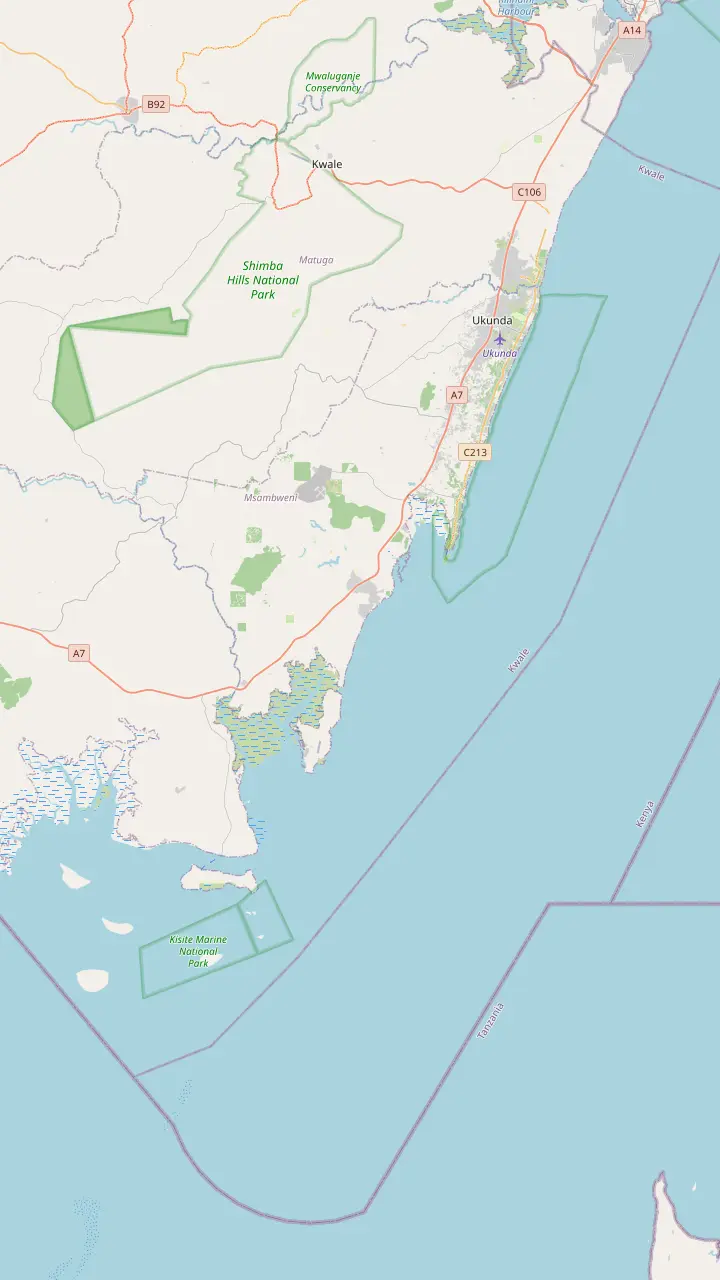
Diani Beach is the pickup area of the home tour, which collects guests from hotels in Diani and Galu.
Google MapsUkunda is the town just behind Diani Beach, on the way south.
Google MapsShimoni is the fishing village on the mainland where the dhow trips board, close to the sea border with Tanzania.
Google MapsWasini is one of 4 inhabited islands in Kwale County, and the dhow day stops here for lunch and a village walk.
Google MapsKisite Island is the core of the fully protected park zone, 11 km off the coast at Shimoni.
Google Maps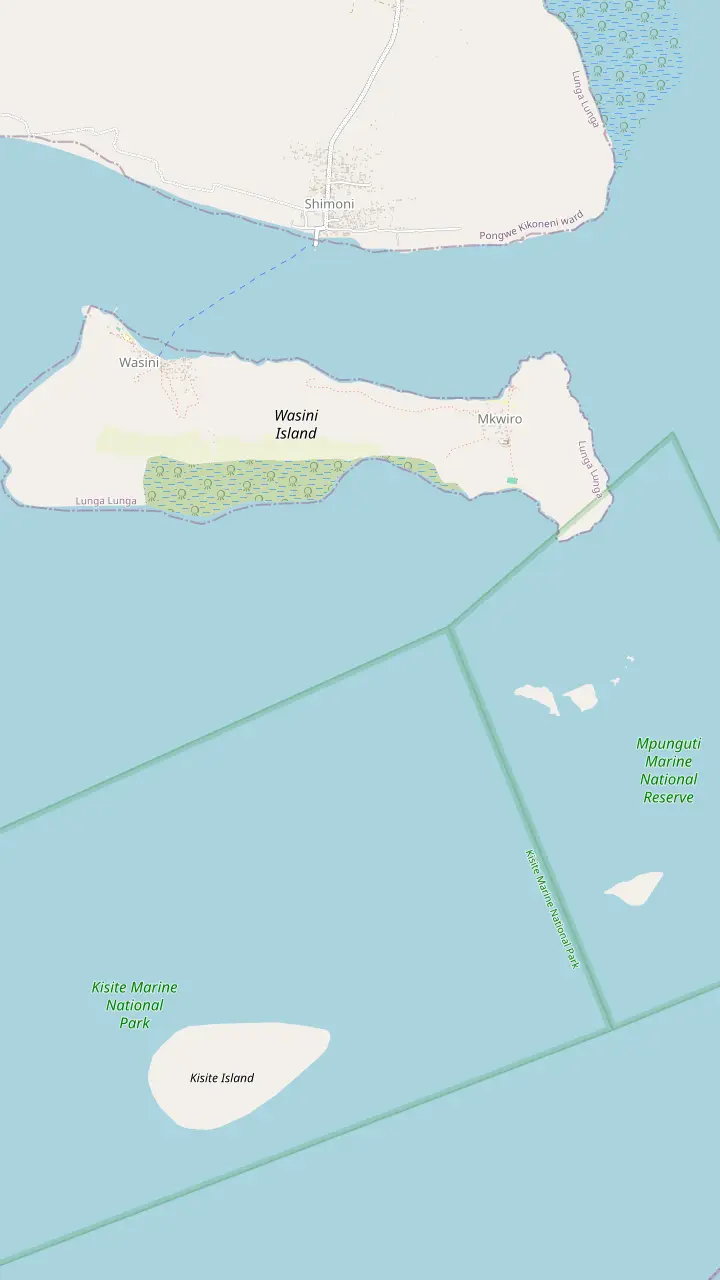
Shimoni is the fishing village on the mainland where the dhow trips board, close to the sea border with Tanzania.
Google MapsThe Shimoni caves are about 200 m from the Shimoni jetty by one listing's note, and a community committee runs them.
Google MapsWasini is one of 4 inhabited islands in Kwale County, and the dhow day stops here for lunch and a village walk.
Google MapsMkwiro is named with Wasini as one of the twin islands that had no grid electricity before the solar mini-grid.
Google MapsKisite Island is the core of the fully protected park zone, 11 km off the coast at Shimoni.
Google MapsMap data by © OpenStreetMap contributors
Behind every Wasini dhow day is a protected area with its own manager, fee table and rules. Here is what Kisite Mpunguti is, what it charges, what it asks of visitors and how the village sits beside it.
Editorial team, wasiniislandtour.quest · Updated November 24, 2026 · 7 min of reading
Basics
Behind the dhows and the seafood lunches is a protected area. The Kenya Wildlife Service places the Kisite Mpunguti marine protected area on Kenya's southern coast in Kwale County, near the Tanzanian border, established in 1973 and gazetted in 1978, and managed by the service.1 It is run by a national wildlife authority, and the fees and rules in this page are that authority's own.
The area has two parts with two levels of protection. Kisite Marine National Park covers 28 km² as a fully protected no-take zone, and the 11 km² Mpunguti Marine National Reserve permits controlled artisanal fishing and low-impact tourism.2 Its islands fall into two systems, Kisite and the Mpunguti group, the latter split into an upper and a lower island.7 Most snorkeling days head for the Kisite side.
The park's own description adds that it encompasses coral rag forest islands fringed by reefs that host endemic marine life and migratory birds.8 An international marine mammal task force counts the area as a home for a small resident population of bottlenose dolphins, and the dolphins page sets out the species.9 The reef page covers the snorkeling itself, so this page stays with the park as an institution.
The fee table
| Visitor | Adult | Child |
|---|---|---|
| East African citizen | KES 5003 | KES 2503 |
| Kenya resident | KES 6753 | KES 3503 |
| Non-resident | $253 | $153 |
| African citizen | $153 | $103 |
Rates as the Kenya Wildlife Service lists them for Kisite Mpunguti; check the current schedule before you travel, since the service may revise it.3,16
To place the park, start at Shimoni. The park service puts it 11 km off the coast there and 8 km north of the Tanzanian border, with Mombasa 90 km away and Nairobi 574 km by the figures on its park page.13 A separate line on the same page rates the trip from Mombasa by road at about 100 km.14 The island guide gives its own distances to Wasini: 43 km to Diani Beach, 74 km to Mombasa and 2 km to Shimoni.15
Wasini is the village island where the dhow days stop for lunch. The map above shows the islands in the channel: Shimoni on the mainland, Wasini, and the islands of the park beyond it. A boat from the Shimoni jetty crosses to Wasini in 15 minutes, and the park lies farther out.10
People who search for Wasini Island and Kisite marine park often want to know whether the two are one place. They are neighbors, not the same site: the park protects the reefs and the outer islands, and the village on Wasini is a separate community that lives beside the water. The dhow days are the link between them, which is why a single day covers both.
Distances
Distances as the sources state them: the Kenya Wildlife Service for the park, and an island guide, by distance and bearing, for Wasini.13,14,15
The Kenya Wildlife Service lists its Kisite Mpunguti entry rates by visitor type, on the park page and in its fee schedule of October 2025.16 A non-resident adult pays $25 and a child $15, an African citizen adult pays $15 and a child $10, a Kenya resident adult pays KES 675 and a child KES 350, and an East African citizen adult pays KES 500 and a child KES 250.3,16
The definitions matter. The park page describes a Kenya resident as a foreign national authorized to reside in Kenya under a valid permit, pass or permanent residence status, and a non-resident as a foreigner visiting on a valid visa.20 The fee schedule of October 2025 prints the same rates for Kisite Mpunguti as the park page.16 If you are unsure which category you fall in, the operator or the park office can confirm.
The fee is the park's, not the tour's. The listings we read are silent on whether the fare already contains the park charge, so confirm it before you pay; see the prices page for the fee set beside each fare.16 The fee schedule is a published document that the service may revise, so check the current rate before you rely on a figure.
Pick by plan
Answer by who you are and see what to check.
If I am a non-resident adult
Check the $25 charge
The service's table shows $25 for a non-resident adult.3
If I travel with a child
Check the age
A non-resident child pays $15, and any child aged five years or less is exempt.3,11
If I live in Kenya
Use the resident rate
A Kenya resident adult pays KES 675 and a child KES 350.3
If I want a drone shot
Budget for the charge
The schedule charges non-residents $300 for each drone each day.19
If I am not sure the fee is in my fare
Ask before you pay
The listings do not say, and cancellation is free up to 24 hours before.
Three places
Fully protected
The reef most dhows visit
Plan your visit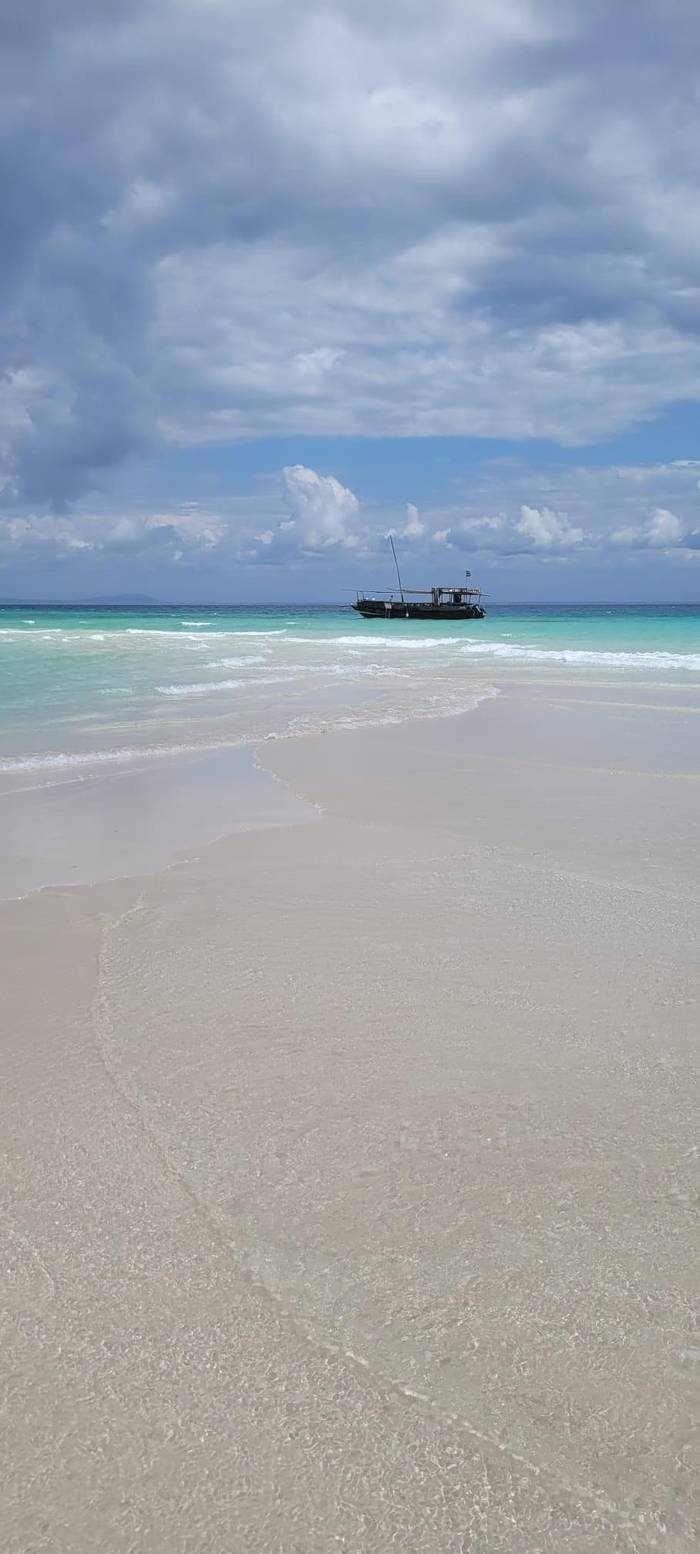
Reserve
Controlled artisanal fishing
Plan your visit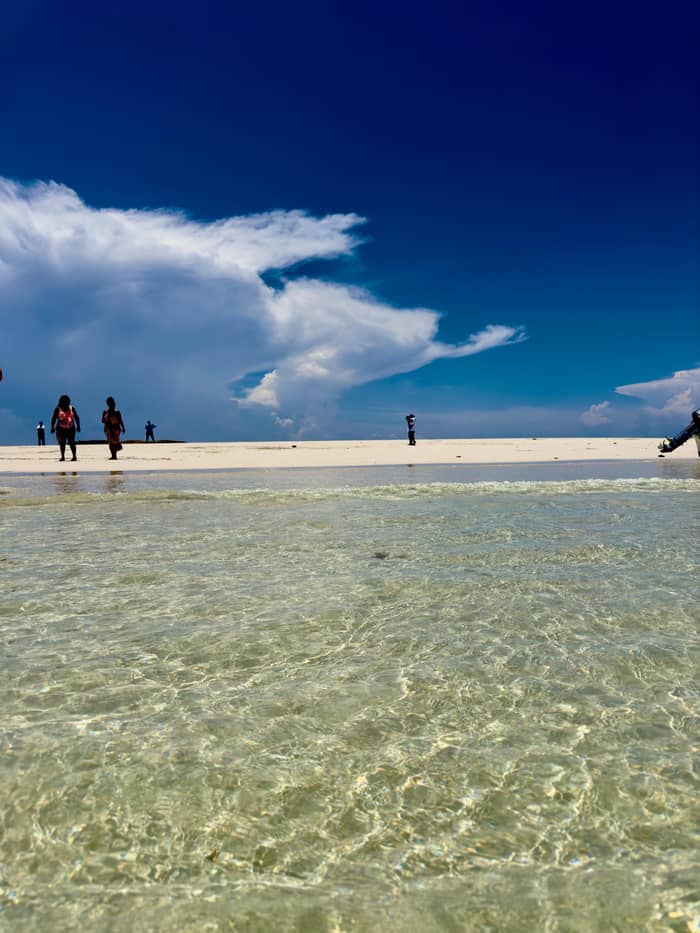
The island
Lunch, boardwalk, community
Plan your visitThe Kenya Wildlife Service's schedule exempts some visitors. Any child aged five years or less does not pay the conservation fees, and so on for other groups the schedule names.11 That is useful for a family with a very young child, though the home listing asks to be contacted first for children under 4 and says children need to be able to swim if they will snorkel.
Boats are treated as a category of their own. The schedule defines an excursion boat as including glass bottomed boats, dhows and catamarans that run snorkeling, diving, bird watching, sunset cruises and mangrove visits within the marine protected areas.29 That definition covers the dhow you sail on, and it is the reason the boat operators deal with the service as businesses and not as private visitors.
Drones are charged separately. The schedule lists a charge per drone, per day and per park, of KES 5,000 for East African citizens and $300 for non-residents, with Kenya Civil Aviation Authority licences required.19 A traveler who wants aerial footage should plan for that charge and the licence, or skip it and rely on the photos and videos that the home tour supplies.
Price your group
Fill in your party and each of four days shows its fare per traveler.
4 options compared
Fill in your party and each of four days shows its fare per traveler.
≈
View≈
View≈
View≈
ViewFigures are GetYourGuide from-prices, translated at the ECB reference rate. The booking step shows what you pay exactly.
A visit
The jetty
Shimoni's floating jetty comes with a guarded car park.10
The entry
The charge is listed by visitor type, and a child of five years or younger is exempt.3,11
The sea
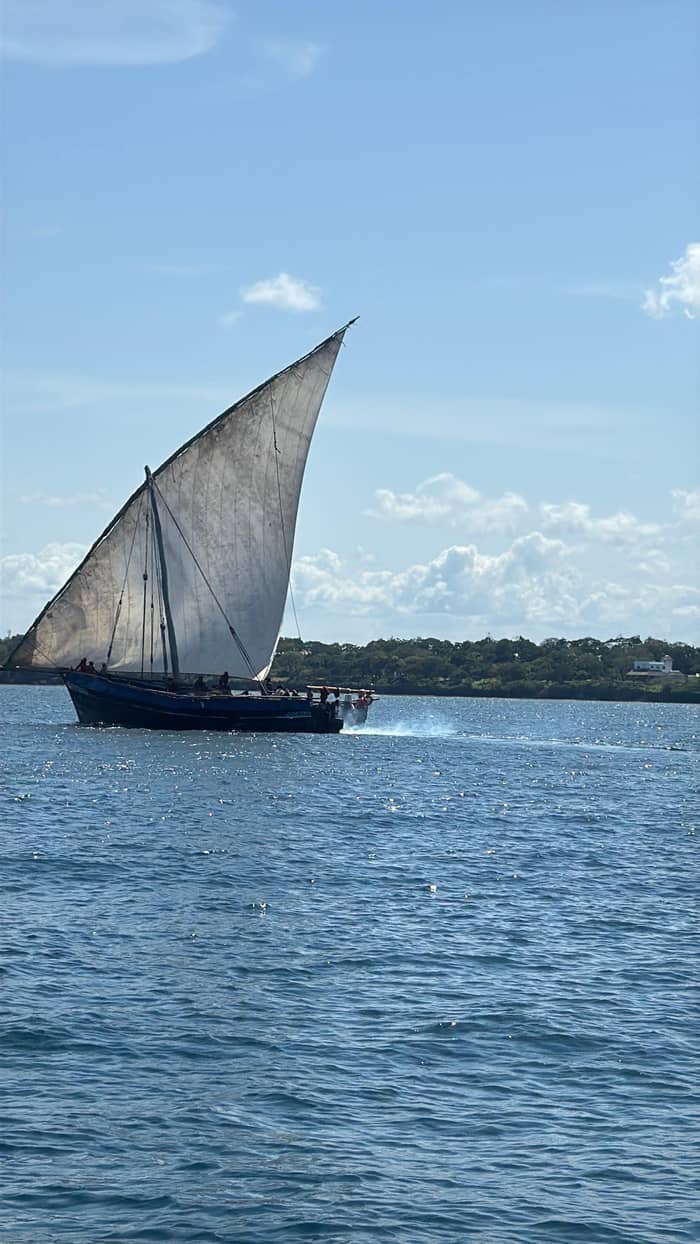
The dhow sails to the park for snorkeling and dolphin watching.
The rules
Visitors are asked to stay 20 meters or more from wildlife.5
The island
A seafood lunch is followed by a guided village walk.
The boardwalk
The Wasini Women Group collects fees for its coral garden boardwalk.12
The park's guidelines are short. Opening time is 6:00 AM and closing time 6:00 PM for day visitors, with overnight stays the exception, the park is plastic-free with single-use plastic prohibited, and rubbish goes out with you.6,4,28 The fee schedule makes the same plastic point for every park, reserve and sanctuary the service runs.30
Wildlife has its own rules. Visitors are asked to keep 20 meters clear of wildlife, and feeding it is prohibited, since it upsets the animals' diet and makes them dependent on people.5,31 The home listing adds a practical rule: no single-use plastic bottles in the marine park, and reusable bottles are encouraged.
None of these rules needs a special effort. A reusable bottle, a bag for your rubbish and a calm approach to any animal cover almost all of them. The harder question is conduct near dolphins, and the dolphins page sets out what one operator's own code asks of its boats, which goes further than the park's general guidelines.32,33
Video
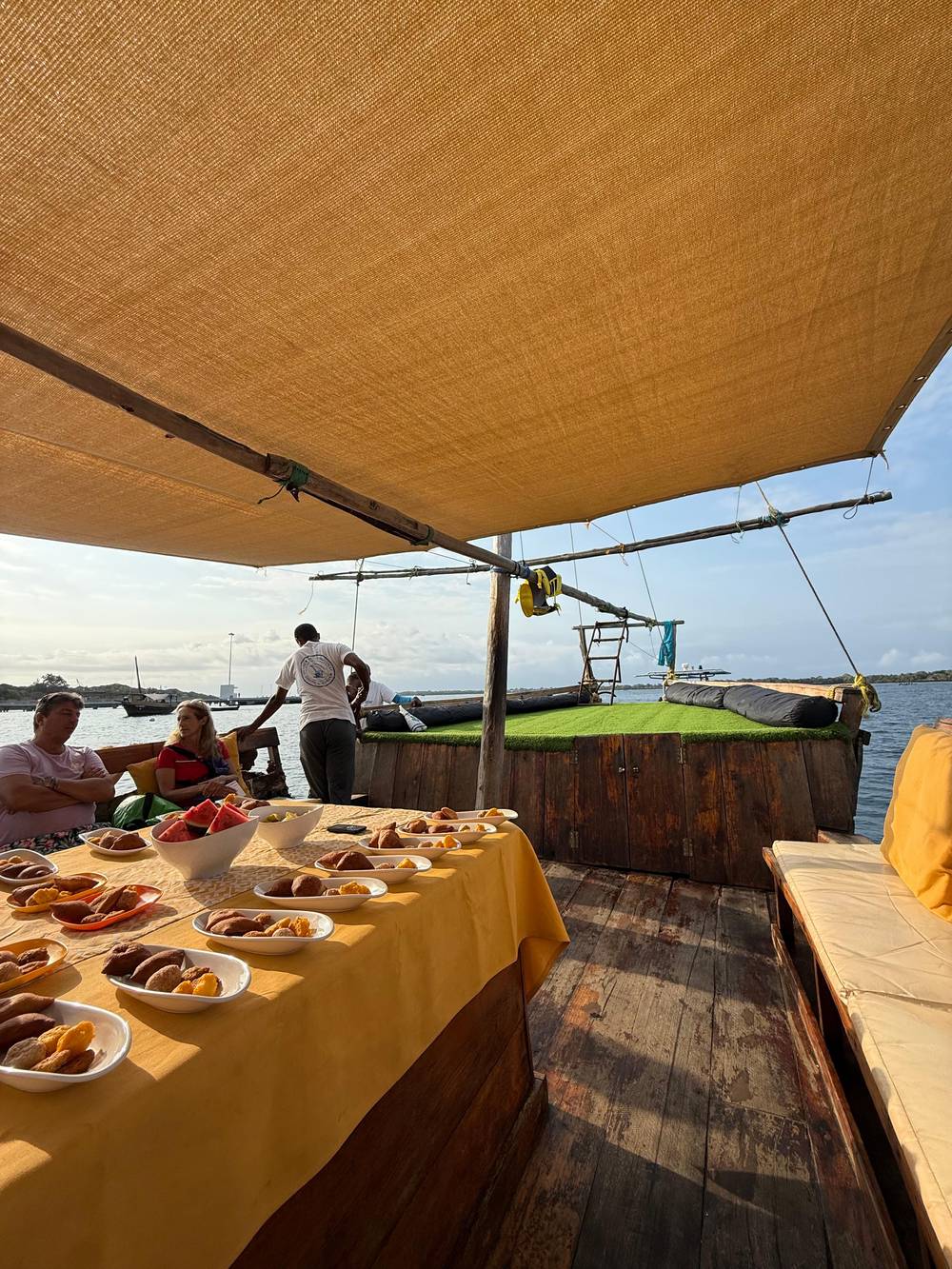
Kiarie Explores KE on YouTube · Video data is requested only when you tap play.
we request that guests wear suitable clothing when visiting the village so as not to offend this strongly Muslim community.
At the park
Communities have worked inside this protected area for a long time. A peer-reviewed review says local communities have operated dolphin-watching excursions in the Kenyan marine protected areas since the mid 1990s, and that the rise of dolphin watching is considered a factor in displacing dolphins if it is not regulated.34,35 The dhow operators and the park service have therefore shared these waters for a long time.
On land, the village runs its own projects. The Wasini Women Group maintains a raised looped wooden boardwalk of over 500 metres through fossil coral gardens and mangroves, and its 70 members run it, take the visitors' fees and lead the guided walks, with the proceeds going to village welfare projects.17,12 One island operator asks visitors to dress suitably in a village that is strongly Muslim.18
Across the channel, the Shimoni caves are run by a community committee advised by the National Museums of Kenya, and all proceeds fund community projects such as school sponsorship and local dispensaries.36,37 The pattern repeats: the park protects the sea, and the village keeps a share of what visitors pay on land. That is a fair reason to carry a little cash for the village.
A 1 day Wasini Island Kisite marine park trip is the format almost every visitor uses. The 9 hour day sold here starts from $92 and pairs a dhow trip to the park, for snorkeling and dolphins, with lunch on the island and a short village walk. It has 466 reviews averaging 4.6, so the record is large.
The day fits the park's opening hours easily, because one community operator starts at 8:30 am and the gates stay open until 6:00 PM.38,6 If you plan a night on the island instead, the stay page weighs that option, and the Diani and Mombasa pages set out the roads. Either way, the park hours above set the outer limits of any visit.
Before you book, keep three questions in mind: is the park charge in the fare, which stops does the day include, and what happens if the sea is rough. Cancelling is free for 24 hours ahead on the home listing, and nothing is due when you reserve, so the operator can answer before any money moves. The calculator above prices four of these days for your party.
FAQ
The service manages the protected area, established in 1973 and gazetted in 1978.1
A non-resident child pays $15, and the schedule lists other rates by visitor type.3
The Kenya Wildlife Service schedule exempts a child who is five years old or younger.11
The park's guidelines prohibit single-use plastic, and the home listing asks for reusable bottles.4
The schedule lists a charge of $300 per drone per day for non-residents, with a licence required.19
The Kenya Wildlife Service puts the park 11 km off the coast at Shimoni.13
Sources
Planning a dhow day to Wasini? Ask a real person here.