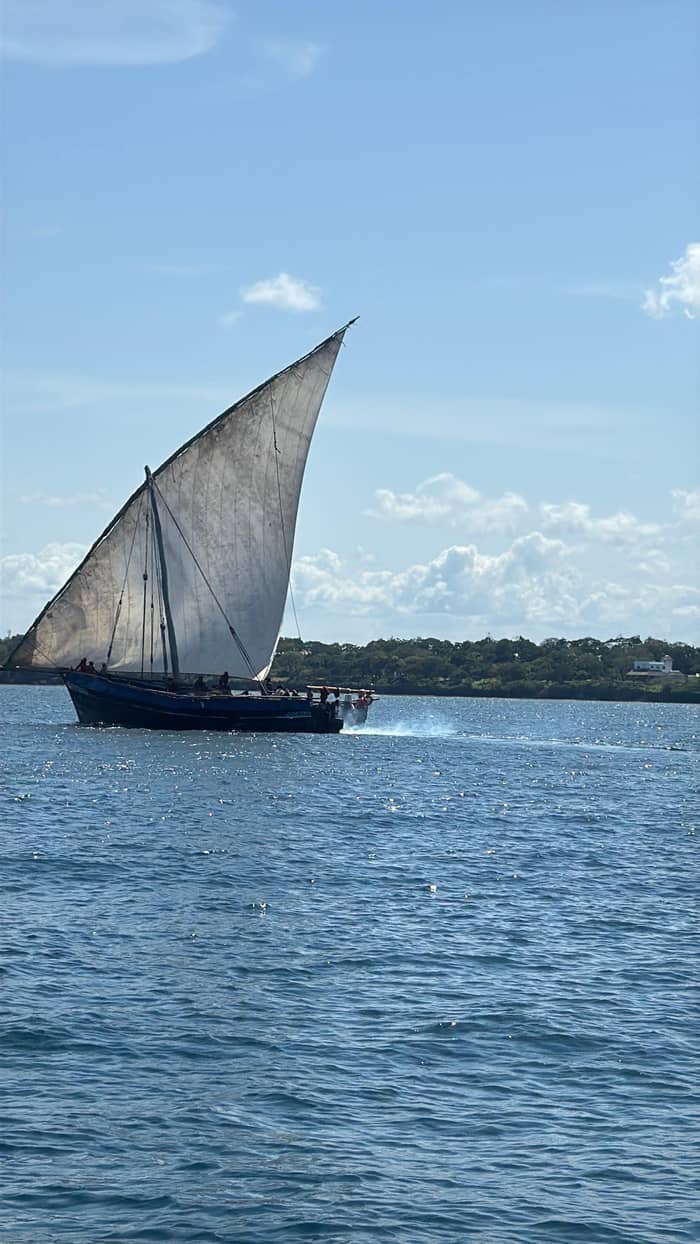
The day sold here
The dhow day sold here
Gear, vests and lunch
- LengthAbout 9 hours
- Reviews466 at 4.62
- From$92
Tick-off checklist
Wasini Island dhow day from Diani
★ 4.6 · 466 opinions
List of 9 items
Tick off each point as you complete it. This device keeps your progress.
0 / 9 ready
Everything is ready. Only your date and your pickup point are left to choose.
Book your seatThe water half of the Wasini day happens at the Kisite Mpunguti reef. Here is what protects it, what the dhow supplies, who can join in, how to behave and how the seasons change the trip.
Editorial team, wasiniislandtour.quest · Updated November 24, 2026 · 7 min of reading
Basics
Wasini snorkeling is not done at Wasini itself but a boat ride away, at the reefs of the Kisite Mpunguti marine protected area. On the day sold here the dhow sails to the Kisite-Mpunguti Park to swim over the reef and look for dolphins, pauses at a sandbank if the tide cooperates, and finishes on the island with lunch. The island is where you eat, and the reef is where you swim.
Wasini island snorkeling differs from listing to listing, and the time in the water differs most. The private cruise plan allows 2 hours of snorkeling and a 30 minute break, a Diani day gives 3.5 hours to the park for swimming and dolphins together, and the day from Tiwi gives it 4 hours. Those are listing plans for particular operators, and a tide or a swell can shorten any of them.
Some listings mention more than one snorkeling stop: a small-group day lists two optional snorkeling spots, and a Mombasa day of 8 hours counts snorkeling among its 6 hours around Wasini. If the stops matter to you, ask the operator where the dhow anchors and how long you will have at each, and treat the answer as a plan and not a promise.
Side by side
| Day | Time in the water | Gear and help | From |
|---|---|---|---|
| Day sold here | Park stop, timing by tide | Gear, life vests, masks on request | $92 |
| Longer Diani day | 3.5 hours at the park | Scuba diving on request | $110 |
| Tiwi lunch day | 4 hours at the park | Instructors for beginners | $137 |
| Private cruise | Snorkeling for 2 hours | Scuba extra, EUR 60 | $160 |
| Small-group day | Two optional spots | Limited to 6 participants | $132 |
Fares are starting prices rather than quotes, and the plans differ by operator, date and tide.
In the park service's words, the reefs fringe coral rag forest islands and shelter endemic marine life.1 The Kisite island and the Mpunguti pair give the dhow a choice of places to stop, and the operator decides which one suits the tide and the sea on your day, so ask the crew where they plan to anchor.6
The protection differs by zone. Only the Kisite part, 28 km² in size, is a fully protected no-take zone; the 11 km² Mpunguti reserve lets artisanal fishing carry on under control.2 For a snorkeler that means the Kisite side is the place where nothing is taken from the water, which is part of why a reef session there is worth the long day.
Protection has a price, and visitors pay it. The park service's rate sheet dated October 2025 asks $25 from a non-resident adult at the gate, while a child of five years or younger pays nothing.7,8 The marine park page sets out the whole fee table, and the prices page compares the fee with each fare.
The coast by month
Mid-month hours with no sun, and days when precipitation reaches 2.5 mm or above. Source: NOAA, station Mombasa airport station, 74.9 km north of the marine park at 55 m, 1991 to 2020 + 1971 - 2020.14
The day sold here supplies the kit. Snorkeling gear is provided, including life vests, and reading-strength masks are available on request. That removes the usual reason to rent equipment on the beach, and it matters for anyone who wears glasses, since the masks are a stated option and not an afterthought.
What you bring is simple. The listing asks for swimwear, a towel, sunscreen, a hat, flip-flops or water shoes and a camera, and it adds that no single-use plastic bottles are allowed in the marine park, so a reusable bottle is encouraged. The Kenya Wildlife Service confirms the rule: its parks, reserves and sanctuaries are single-use plastic free zones.10
Anyone who wants to go deeper than a mask can look at scuba, which some days offer. On the private cruise, scuba diving appears as an optional extra priced at EUR 60 in cash, and another Diani day keeps scuba available on request. A day sold as a snorkeling day is not a diving course, so ask for the details and the operator's certification before you pay for either.
Pick by confidence
Answer by how you feel in the water and see where to look.
If I snorkel often
The dhow day sold here
It provides gear, life vests and a stop at the marine park.
If I have never snorkeled
Ask for an instructor
A Tiwi day lets guests learn to snorkel with instructors.
If I cannot swim
Stay on the dhow or use a vest
One listing lets non-swimmers stay on the dhow, and the home day provides life vests.
If I want to dive
Ask about scuba
The private cruise offers scuba diving for an extra EUR 60, if you want it.
If I want to stay near Diani
The glass boat trip
It starts from $42 and runs about 4 hours.
Three ways to the water
The day sold here
Gear, vests and lunch
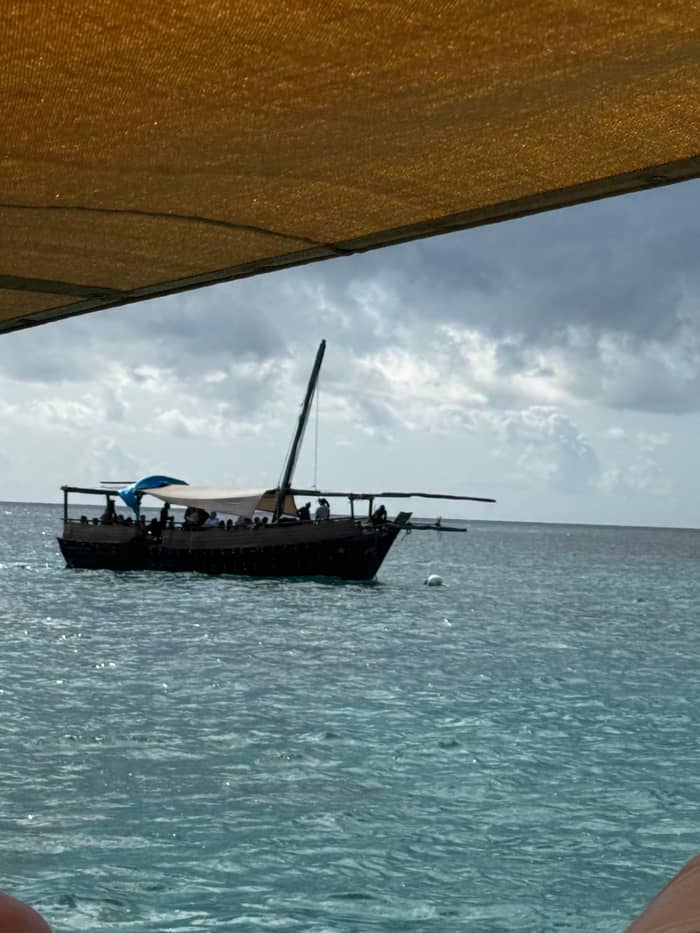
For beginners
Instructors for beginners
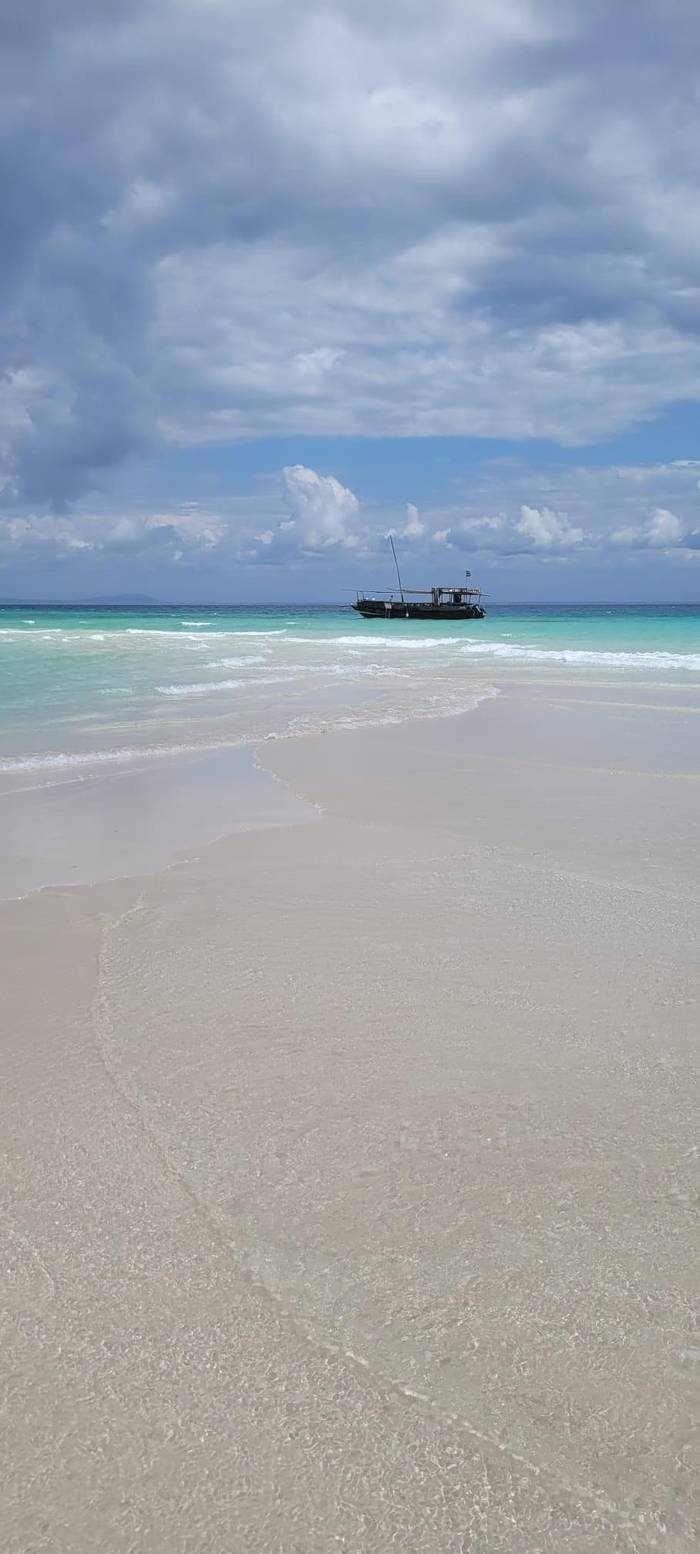
Shorter
Easier on the swimmer
The home listing is careful about swimming ability. Children may come along, provided they swim well enough to snorkel, and the operator wants to hear first about under 4s. The listing is blunt about who should skip it: people with restricted mobility, serious back trouble or a dread of deep water. That is a clear statement of who the program was built for.
Non-swimmers have options on other days. The community operators say assistance for non-swimmers is provided, and another Diani listing says guests who do not swim can keep to the dhow at the snorkeling stop.3 A day from Tiwi lets guests learn to snorkel with instructors if they have not done so before, which helps first-timers.
If you do not want to swim at all, the glass boat is the easier alternative. The Robinson Island trip begins in Diani at $42, with 108 reviews at 4.5, and takes about 4 hours with a sandbank and optional snorkeling, though it stays close to Diani and away from the marine park. It answers a different question from the Wasini reef.
Price your group
Enter how many will snorkel and each listing shows its per-person fare.
4 options compared
Enter how many will snorkel and each listing shows its per-person fare.
≈
View≈
View≈
View≈
ViewFigures are GetYourGuide from-prices, translated at the ECB reference rate. The booking step shows what you pay exactly.
A reef session
On the boat
The kit, life vests included, comes with the day sold here.
Before the water
Operators offer assistance to non-swimmers.3
At the reef
The private cruise plan counts snorkeling for 2 hours.
The break
The same plan counts a break of 30 minutes.
The sandbank
High water can cover the sandbank.
Back on board
The dhow goes on to Wasini for a seafood lunch.
The park's guidelines apply to snorkelers as much as to drivers. Visitors are asked to keep 20 meters from wildlife, feeding it is prohibited, and rubbish is carried out with you.4,5,11 One Wasini operator goes further and bars guests and crew from swimming with, feeding or touching any marine animal.12 A short briefing from the crew before you enter the water is a good moment to ask what they expect.
A snorkeler who meets dolphins should float calmly and let them come closer, which is the advice in that operator's code, and never swim after them.13 The same restraint applies to a turtle, a ray or a fish: look, do not touch. The records do not set out a rule on touching coral, so the safest practice is the plain one, which is to float above the reef and keep your fins off it.
Sun protection is part of reef care too, and the listing simply asks for sunscreen and a hat. The records do not name a type of sun cream, so ask your operator if the park has a preference. A short check of what the operator expects takes a minute and sets the tone for a day spent over a protected reef.
Video
The Awkward Tourists on YouTube · Video data is requested only when you tap play.
National parks are plastic-free. Single-use plastic is prohibited.
The coast has a clear rainy pattern. The nearest station is Mombasa, 74.9 km north of the park, and it logs 284 mm of rain in May and 233 mm in October, against 10 mm in February and 34 mm in January.14,14,14,14 The station is on the mainland and not at the island, so read the figures as a guide to the coast and not as a reef report.
Temperature changes little. The average daily high runs from 27.8 °C in July to 32.9 °C in February at the same station.14,14 Wetter months mean more wet days: May counts 14 days with at least 2.5 mm of rain, against 1 day in February.14,14 A day with heavy rain is not the end of a snorkeling trip, but rough weather can change the program, as the listing warns.
If whales are on your wish list, aim for July to October, when humpback whales come to calve and nurse their young.15 A traveler who wants both a drier month and a chance of whales can look at those months first. The records give no reef visibility figures, so ask the operator what the water has been like in the days before your date.
People who search for the Wasini Island coral gardens often mean a different place from the reef. On the island itself, the Wasini Women Group keeps up a looped wooden boardwalk, over 500 metres long, that crosses fossil coral gardens and mangroves, and the sea covers the gardens below it at high tide.16,17 That is a walk, not a swim.
The reef is where the living coral is. The two are sold together on many days: the dhow goes to the reef first and reaches the village later, where the coral garden is an optional part of the itinerary. The land coral garden has its own page of notes, and the reef has this one. Both are worth the day, and neither replaces the other.
For your plan, treat the reef as the snorkeling decision and the boardwalk as the village decision. The calculator above prices four snorkeling days for your party, and each allows free cancellation up to 24 hours before. A booking with free cancellation is the easiest way to hold a date while you watch the tide tables and the forecast.
FAQ
The dhow sails to the marine park for snorkeling, and the island is where you have lunch.
Gear and life vests are supplied on the day sold here, and masks in a reading strength are offered on request.
Operators offer assistance, and one listing lets non-swimmers stay on the dhow during snorkeling.3
Children can snorkel once they swim confidently, and under 4s need a message to the operator first.
Sources
Planning a dhow day to Wasini? Ask a real person here.