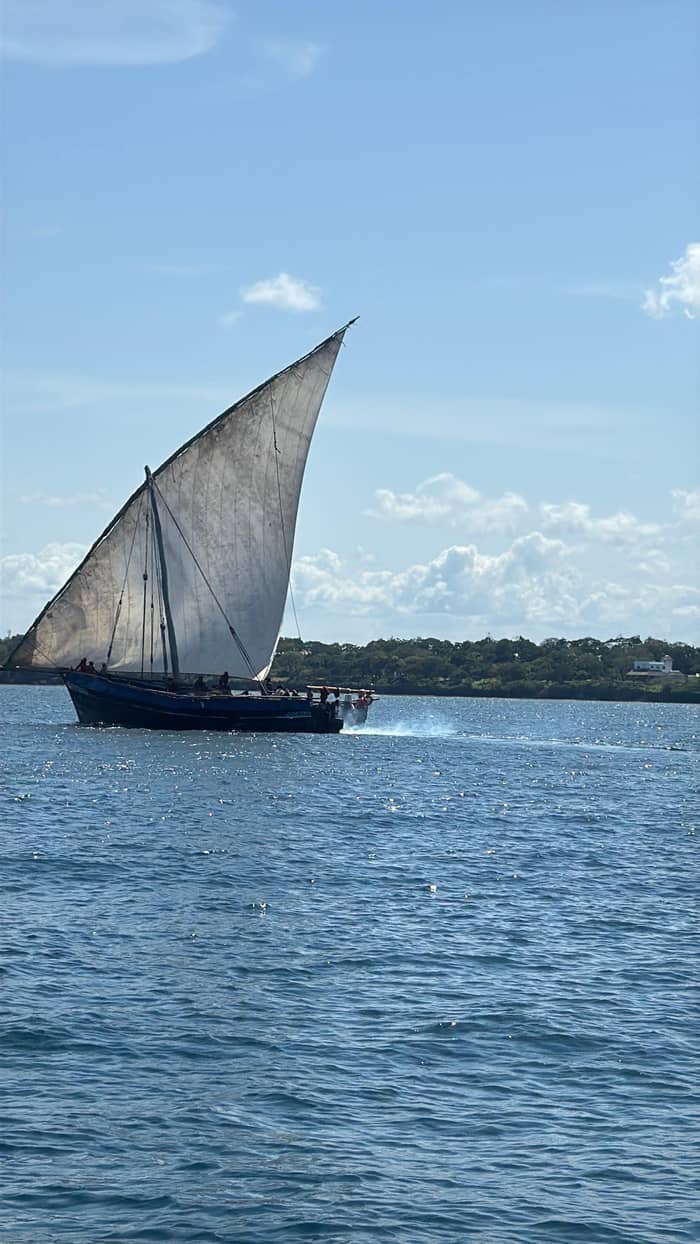
On the island
Wasini village
Fishing and lunch
See the dhow dayYour stop on the map
Fast answer
Wasini Island, Kenya is an inhabited coral island off Shimoni in Kwale County, beside the Kisite Mpunguti marine park and the Tanzanian border.
The island in brief
Discover 16 stops
Pick a route, then tap a marker or a stop for notes and a Google Maps link.
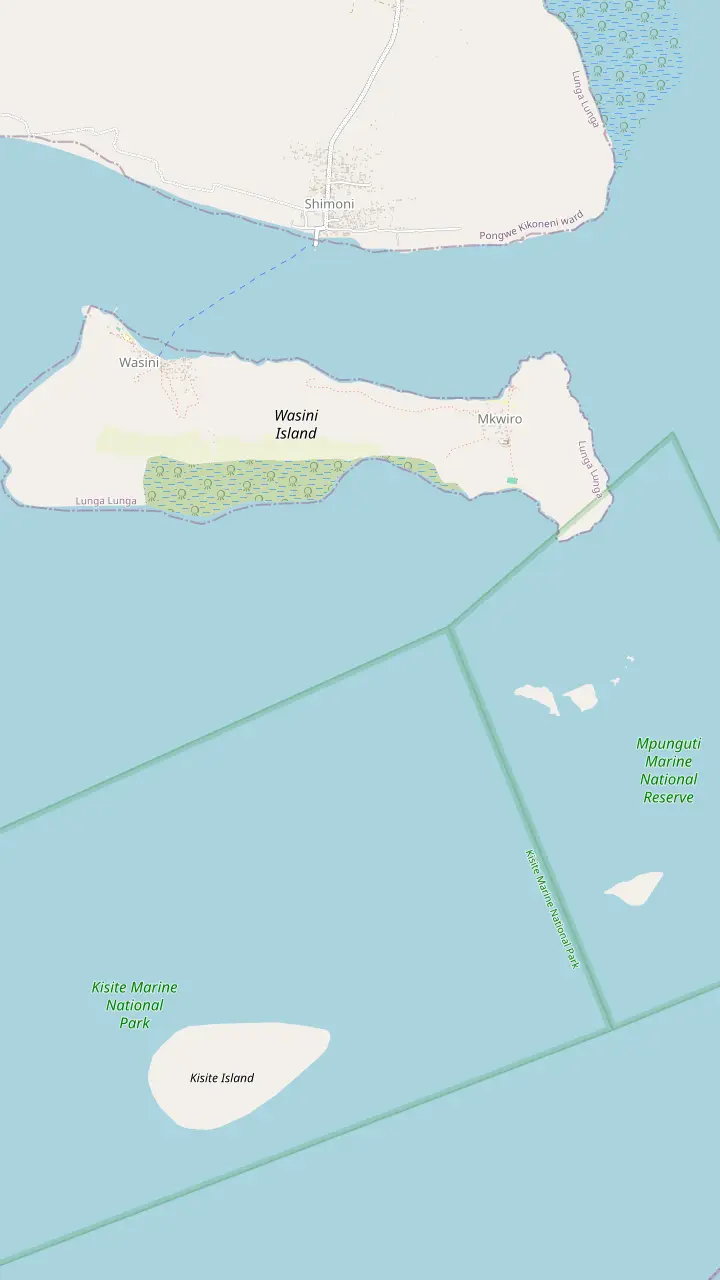
Shimoni is the fishing village on the mainland where the dhow trips board, close to the sea border with Tanzania.
Google MapsThe Shimoni caves are about 200 m from the Shimoni jetty by one listing's note, and a community committee runs them.
Google MapsWasini is one of 4 inhabited islands in Kwale County, and the dhow day stops here for lunch and a village walk.
Google MapsMkwiro is named with Wasini as one of the twin islands that had no grid electricity before the solar mini-grid.
Google MapsKisite Island is the core of the fully protected park zone, 11 km off the coast at Shimoni.
Google Maps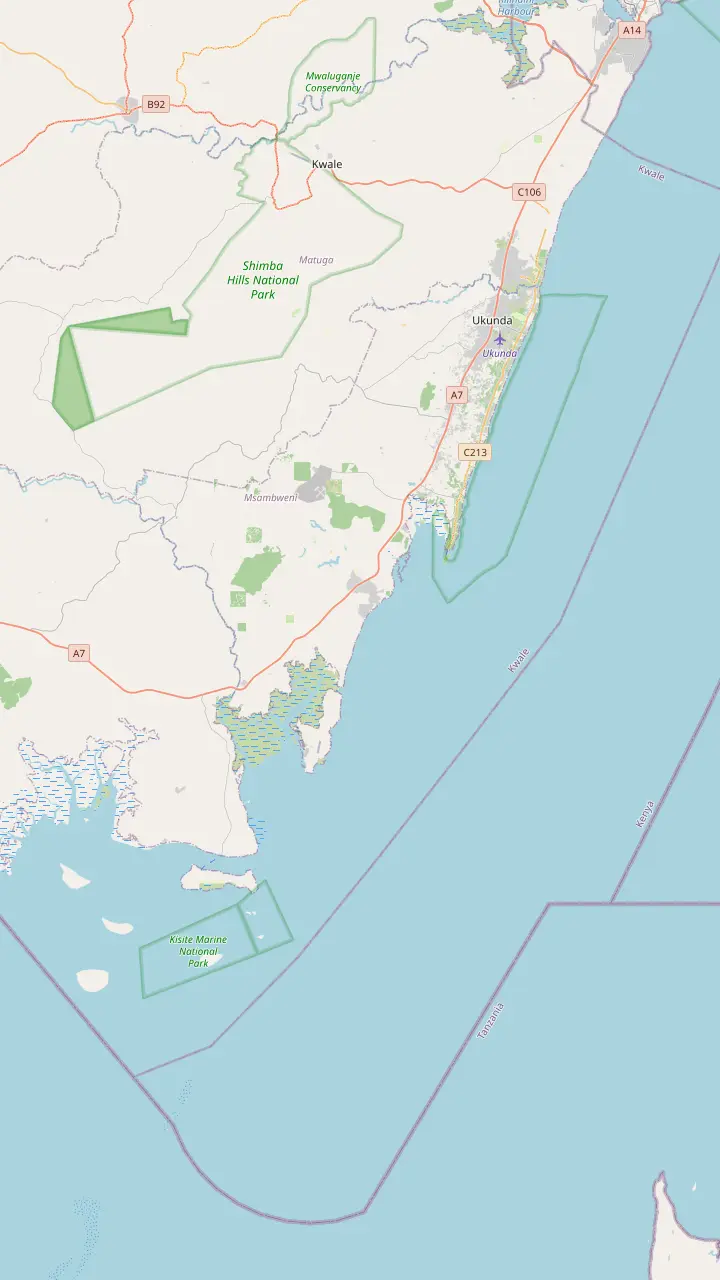
Diani Beach is the pickup area of the home tour, which collects guests from hotels in Diani and Galu.
Google MapsUkunda is the town just behind Diani Beach, on the way south.
Google MapsShimoni is the fishing village on the mainland where the dhow trips board, close to the sea border with Tanzania.
Google MapsWasini is one of 4 inhabited islands in Kwale County, and the dhow day stops here for lunch and a village walk.
Google MapsKisite Island is the core of the fully protected park zone, 11 km off the coast at Shimoni.
Google Maps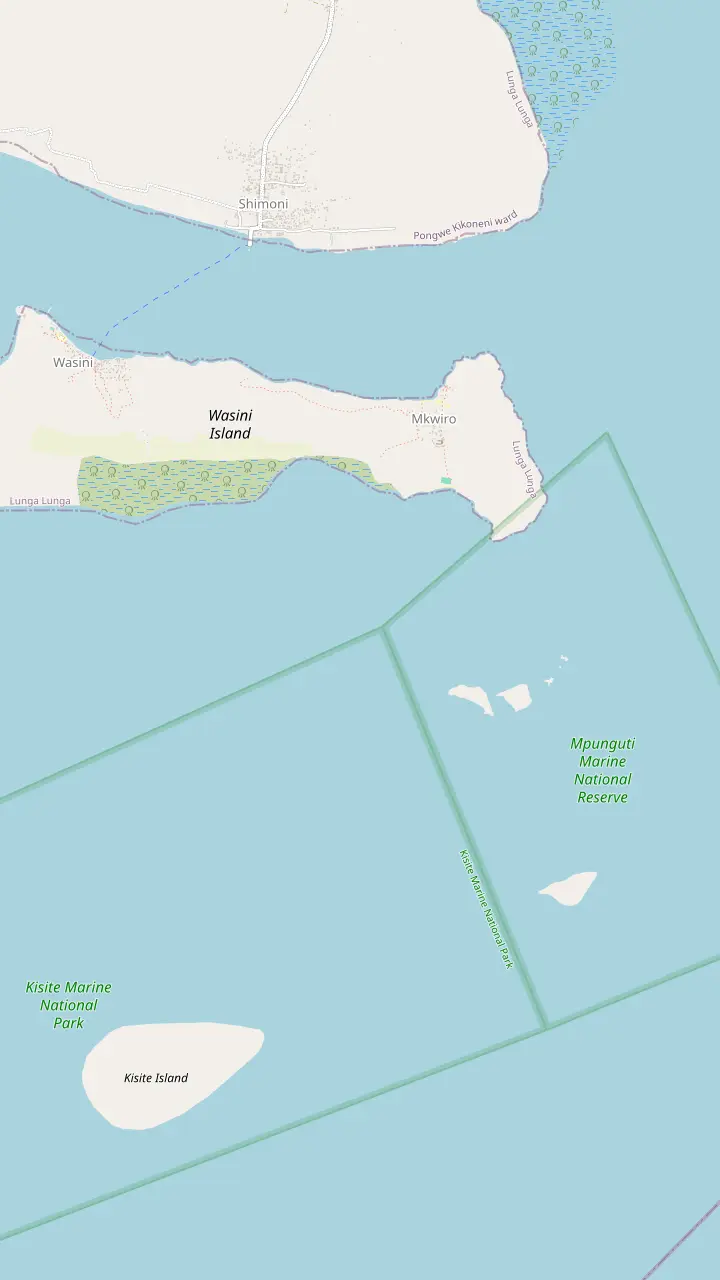
Shimoni is the fishing village on the mainland where the dhow trips board, close to the sea border with Tanzania.
Google MapsWasini is one of 4 inhabited islands in Kwale County, and the dhow day stops here for lunch and a village walk.
Google MapsMkwiro is named with Wasini as one of the twin islands that had no grid electricity before the solar mini-grid.
Google MapsThe Upper and Lower Mpunguti islands make up the second island system of the marine protected area.
Google MapsMpunguti Marine National Reserve covers 11 km2 and allows controlled artisanal fishing and low-impact tourism.
Google MapsKisite Island is the core of the fully protected park zone, 11 km off the coast at Shimoni.
Google MapsMap data by © OpenStreetMap contributors
Where the island sits on the Kwale coast, how its people live, what the coral garden and the boardwalk really are, and how the island relates to the marine park.
Editorial team, wasiniislandtour.quest · Updated November 24, 2026 · 8 min of reading
Basics
Wasini Island lies off the southern tip of Kenya's coast, in Kwale County, a short boat hop from the fishing village of Shimoni. The Kenya Wildlife Service places the whole Kisite Mpunguti protected area on that southern coast, close to the Kenya and Tanzania border.1 Anyone typing Wasini Island location into a search box is really asking how far south the trip goes, and the answer is almost to the edge of the country.
The numbers help. By the wildlife service's measure the park is 11 km out from Shimoni and 8 km short of the Tanzanian frontier.2 A guide written by island boat operators measures the island by distance and bearing, giving 2 km to Shimoni, 43 km to Diani and 74 km to Mombasa.9 Read together, they tell you the island is close to the mainland, far from any city, and nearer to Diani than to Mombasa.
Two caveats keep the map honest. The wildlife service also gives 90 km from Mombasa to the park, and elsewhere about 100 km by road, which are different measures from the island guide's straight line.10,11 And the pins on this page show the island, the village of Mkwiro and the caves at their mapped positions, not the exact landing steps. Treat every figure as a planning aid, and ask your operator for the pickup time that fits your start point.
Facts at a glance
| Place | What it is | Source figure |
|---|---|---|
| Wasini Island | Inhabited coral island with a village | Among the 4 inhabited islands of the county3 |
| Mkwiro | Twin island named with Wasini | Both had no grid power before the solar grid6 |
| Kisite Island | Core of the fully protected zone | Park zone of 28 km28 |
| Mpunguti islands | Reserve with controlled fishing | Reserve of 11 km28 |
| Shimoni | Mainland fishing village | Island is 2 km away9 |
Figures come from the county plan, the Kenya News Agency, the wildlife service and an island guide.3,8,9
The island is built of old coral, and that geology shapes everything a visitor sees. The Kenya News Agency describes the coral gardens as giant coral rocks on Wasini beside a mangrove forest, part of an income-generating eco-tourism project that preserves both while providing a livelihood for the fishing community.5 Nothing about the garden is artificial: the rock was a living reef long ago and is now dry land with the sea at its edge.
What makes the garden walkable is a raised wooden path. The island's own community pages say the women's group maintains a looped boardwalk of over 500 metres through the fossil coral gardens and the mangroves.12 The county development plan lists the Wasini Women Boardwalk among the community-owned eco-tourism projects of Kwale, next to the Gazi boardwalk on the mainland.13 A path on stilts keeps feet off the rock and roots, which is the point.
Tides change the walk. The same community pages explain that the sea covers the coral gardens at high tide, so guides lead visitors along the boardwalk above the water.14 A low-tide visit shows the rock itself, a high-tide visit shows water among the mangroves, and neither is the wrong day. If the garden matters to you, ask the operator about the tide on your date instead of assuming a fixed view. Rock of the same kind lies across the channel, where the Shimoni caves lie in old reef that now stands above the sea, and visitors and researchers may enter them as a memorial to the years of the slave trade.15,16
Wasini is lived in, not staged. The county development plan counts 20 islands in Kwale and says 4 of them are inhabited, namely Wasini, Funzi, Mzizima and Chale.3 The Kenya News Agency calls Wasini a famous fishing ground and pairs it with Mkwiro as the twin islands of a solar project, which tells you that more than a single settlement shares the coral rock.4,6 That is why the island feels like a small community and not a single quay with a restaurant.
The village runs on groups of neighbours. A community group of 70 women is reported to run the coral garden, collect the visitor fees, guide the walks and put the proceeds into welfare projects for the village.18 A Beach Management Unit, made up of youth and women, leads work on coral reef and seagrass restoration.25 When you pay a fee on the island, those groups are who it is going to.
Etiquette is simple and worth stating. One operator on the island describes the village as strongly Muslim and wants guests dressed to match.17 That means dressing modestly on the walk, even if you arrived in swimwear and are drying off in the sun after the reef stop. A shawl or a light shirt in your bag handles it, and the walk is more pleasant when you do not feel out of place.
Pick your angle
Tap what interests you and the stop that answers it sits beside it.
If I want to see the coral rock
The coral garden boardwalk
A raised path of over 500 metres runs through the fossil coral and mangroves.12
If I want to meet the community
The village walk
Women's groups run the garden and put fees into village projects.18
If I want the history
The Shimoni caves
The caves held captives before shipment to Zanzibar, and visits support community projects.20,21
If I want to snorkel
A dhow day to the park
The park lists snorkeling and coral gardens among its attractions.22
If I want to do it alone
Minibus to Shimoni
A minibus from Ukunda takes about 2 hours, and the boat takes 15 minutes.23,24
Three places on the island side
On the island
Fishing and lunch
See the dhow day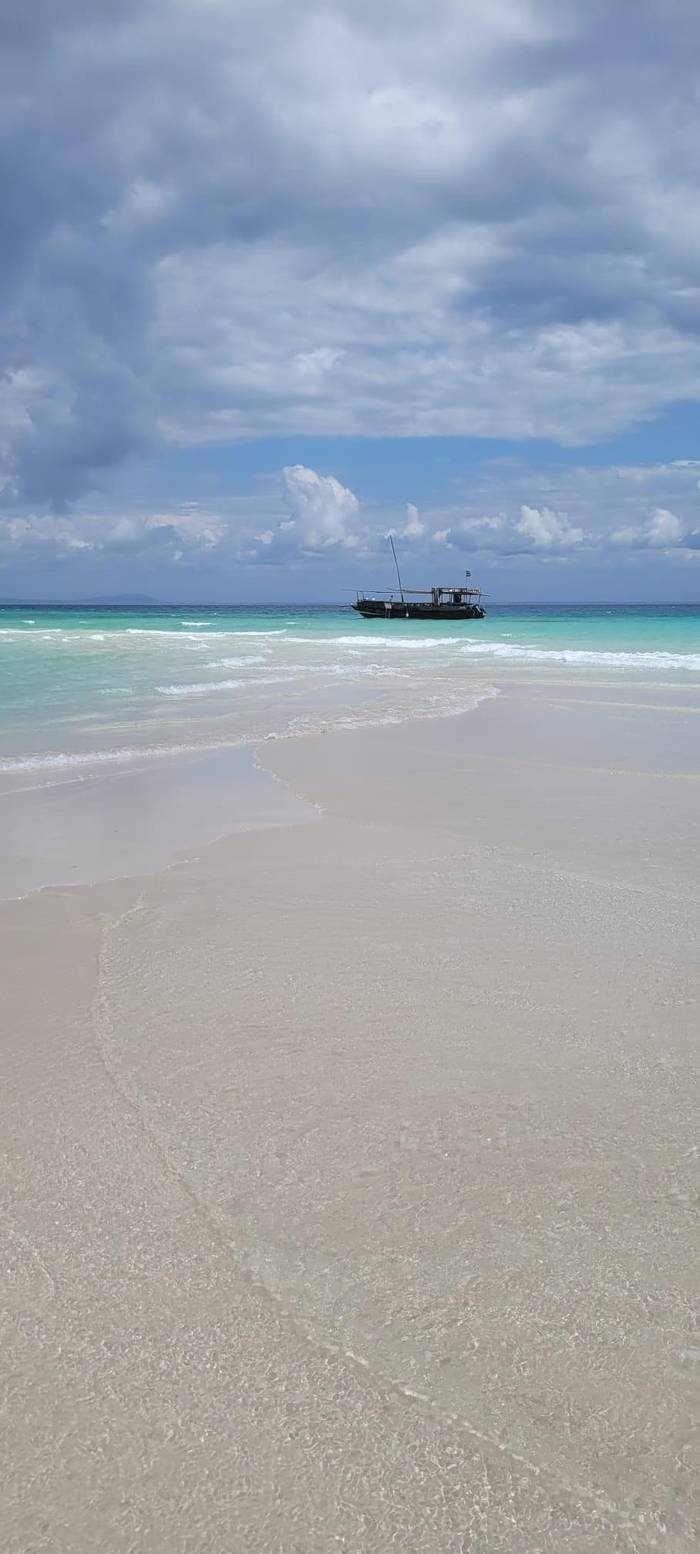
On the island
Boardwalk over fossil coral
See the dhow day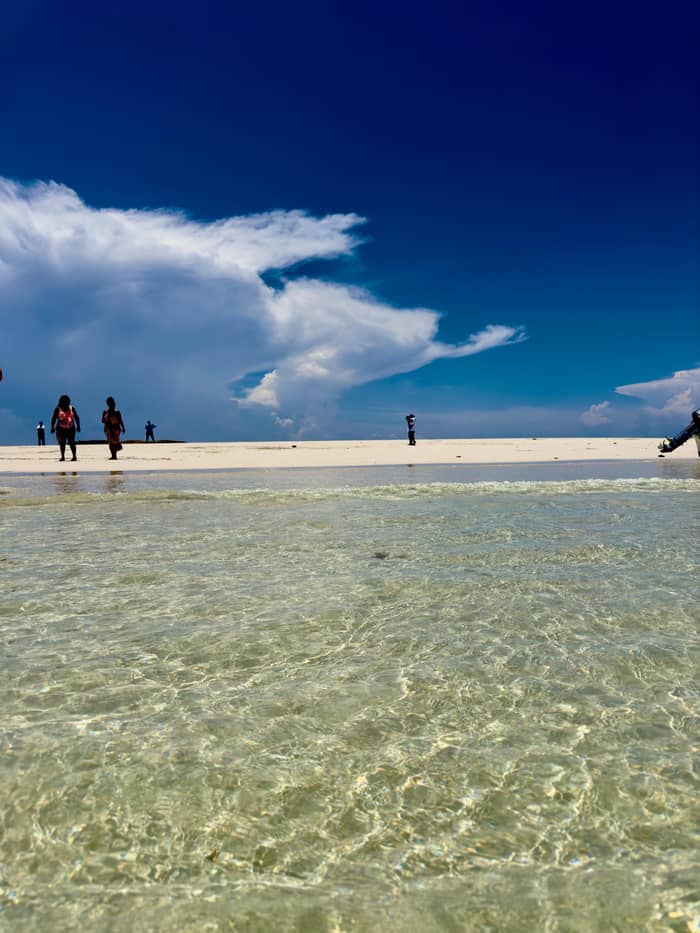
Across the water
On the mainland side
See the dhow dayThe sea is the economy. A Wasini fisherman told the Kenya News Agency that most islanders fish for a living, and that without electricity they smoked their catch and tried to sell it quickly.31 That detail explains why the community cares so much about the reef. A healthy reef feeds the island whether or not a boat full of visitors turns up, and it keeps the fish within reach of small boats.
Restoration work is visible in the reports. The Coast Development Authority credits its Wasini project with more than 170,000 mangrove seedlings grown and over 2 kilometers of reef brought back.32 The same story records 2 hectares of restored sea grass with over 10,000 seedlings transplanted.33 These are figures from the agency doing the work, so read them as its own account of progress.
The link between reef and income is stated plainly by a women group leader, who says islanders would lose valuable tourism and fishing income without healthy coral reefs.34 For a visitor that is a useful way to see the trip. Your fee and your behaviour in the water both feed the same system, and the guides you meet have a stake in the reef looking the same next season as it looks to you today.
Tours that include the island
Enter how many are travelling and compare what a day that lands on Wasini would cost your party.
3 options compared
Enter how many are travelling and compare what a day that lands on Wasini would cost your party.
≈
View≈
View≈
ViewFigures are GetYourGuide from-prices, translated at the ECB reference rate. The booking step shows what you pay exactly.
The island in a day
Early morning
Pickups cover hotels in Diani and Galu.
Mid morning
The cruise to the marine park takes about 1 hour.
Late morning
At high tide the home listing warns that the sandbank may be out of sight.
Midday
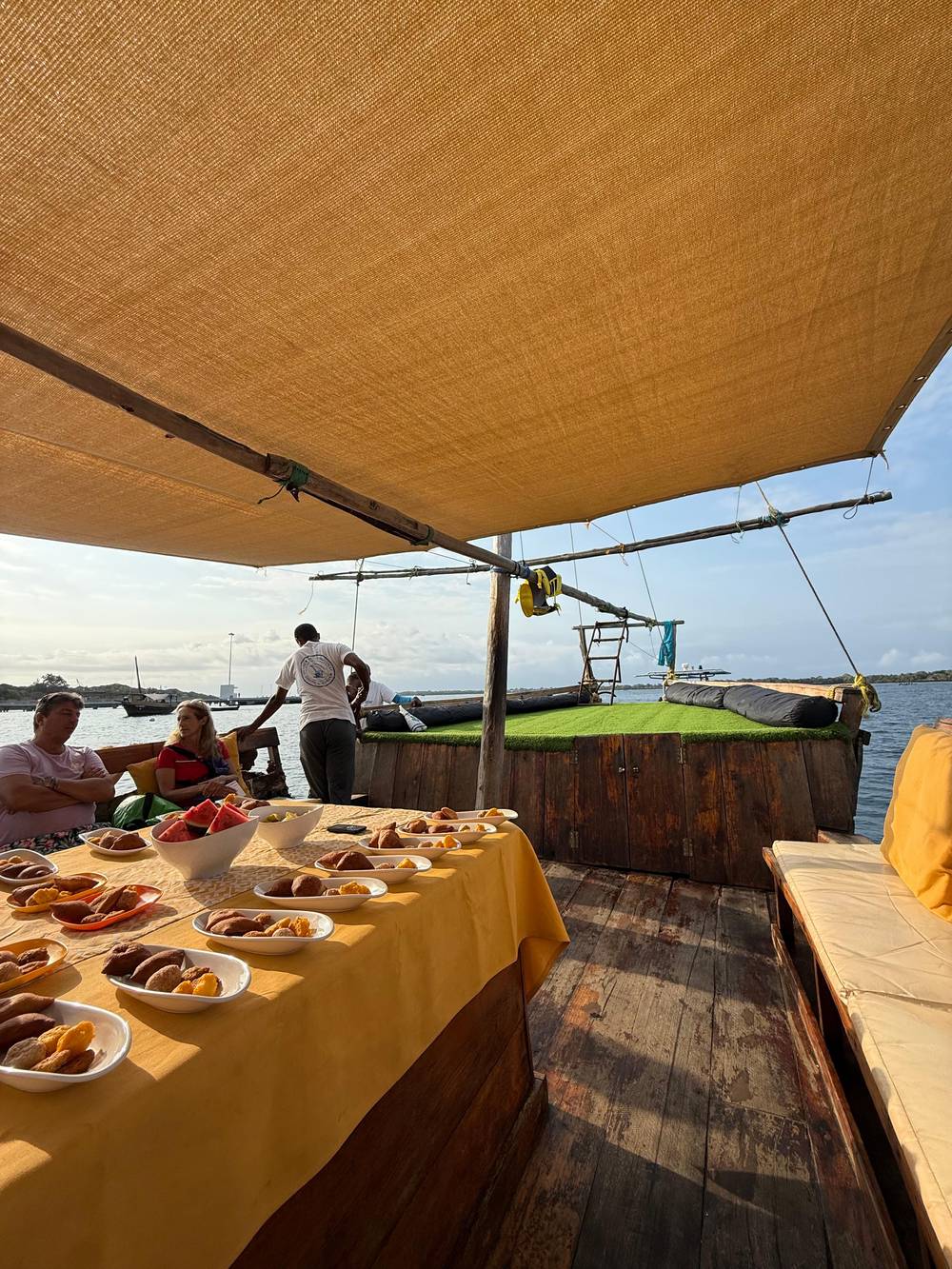
Lunch is a Swahili-style meal on Wasini Island.
Afternoon
A walk follows through the village, with the coral garden on offer.12
Until recently the island ran on diesel and kerosene. The Kenya News Agency reports that the twin islands of Mkwiro and Wasini had never had grid electricity, and that residents depended on diesel generators and kerosene lamps before a solar mini-grid was inaugurated.6 The mini-grid has 1,820 solar panels and 247 lead-acid batteries and benefits 600 homes.7 It is a good reminder that this is a small place with small infrastructure.
What that means on a visit is modest. The governor told the agency the project would support the fishing and tourism sectors that the islands depend on.35 I did not find an official page that lists shops, banks or cash machines on the island, so bring what you need and do not assume it can be bought on arrival.
There is also no hotel chain skyline to find. The Kenya Wildlife Service lists its own accommodation for the park as Mbugani Homes and Shimoni Cottages, and the cottages carry the name of Shimoni, on the mainland side.36 When you plan a night in the area, the where-to-stay guide here sets the options side by side, which is the page to read before you build a trip around sleeping on Wasini itself.
Video
Eve Hakika on YouTube · Video data is requested only when you tap play.
the coral gardens are part of an income generating eco-tourism project to help preserve the giant coral rocks on Wasini island and the mangrove forest while providing a livelihood for the fishing community
Before you go
Most visitors to Kenya's Wasini Island come on a dhow day, but independent travel is possible. The island guide says the D543 road runs 15 km to Shimoni at the end of the Shimoni peninsula, and that a guarded car park stands beside the Kenya Wildlife Service floating jetty.30,24 The boat to Wasini from there takes 15 minutes by the same source.24 That short crossing is the only boat you need to reach the island itself, so a rented car or a taxi can cover everything before it.
Public transport is slow. The island guide gives about 2 hours for a direct minibus from Ukunda to Shimoni, and about 3 hours from Mombasa after crossing the Likoni ferry on foot.23,37 A taxi from the Mombasa bus stops, the SGR station or the airport takes about 2.5 hours.38 Kenya Ferry Services runs the Likoni crossing around the clock, and pedestrians cross for free while vehicles pay.39
Weigh that against a tour. Hotel pickup in Diani and Galu is built into the home dhow day, which costs from $92, with the road, boat, snorkeling gear and lunch bundled in. Going alone gives you freedom on the island, but you arrange the boat, the park fee and lunch yourself, and the community boat operators run their own day tour from the Shimoni jetty at set hours.40
Wasini is the base for the park rather than part of it. The wildlife service says the protected area was established in 1973 and gazetted in 1978.41 It holds the Kisite Island system and the Upper and Lower Mpunguti Islands.27 The 28 km2 Kisite park is closed to all taking of marine life, whereas the 11 km2 Mpunguti reserve allows controlled fishing and low-impact tourism.8
What lives out there is the reason the boats go. The wildlife service's attraction list includes snorkeling, dolphin swims, coral gardens, a haven for turtles and an Important Bird Area.22 That list reads like a menu, and a single boat day samples only a few items from it. A marine mammal habitat factsheet adds that dolphin watching here mostly follows a small resident pod of Indo-Pacific bottlenose dolphins.42
Visitors pay to enter, and the numbers are public. Entry is priced on the park page's rate card at $25 for foreign adults and $15 for foreign children, and the home listing prefers refillable bottles.43 The park rules go further and call national parks plastic-free.29 Check whether the day you book already includes the fee before you pay twice, and keep a copy of what the operator tells you about it.
FAQ
Its own lodging list shows cottages at Shimoni, while no official register of rooms on Wasini turned up.36
The island's community pages describe a looped boardwalk of over 500 metres through coral gardens and mangroves.12
The village is described as strongly Muslim, so dress suitably when you walk through it.17
Sources
Planning a dhow day to Wasini? Ask a real person here.