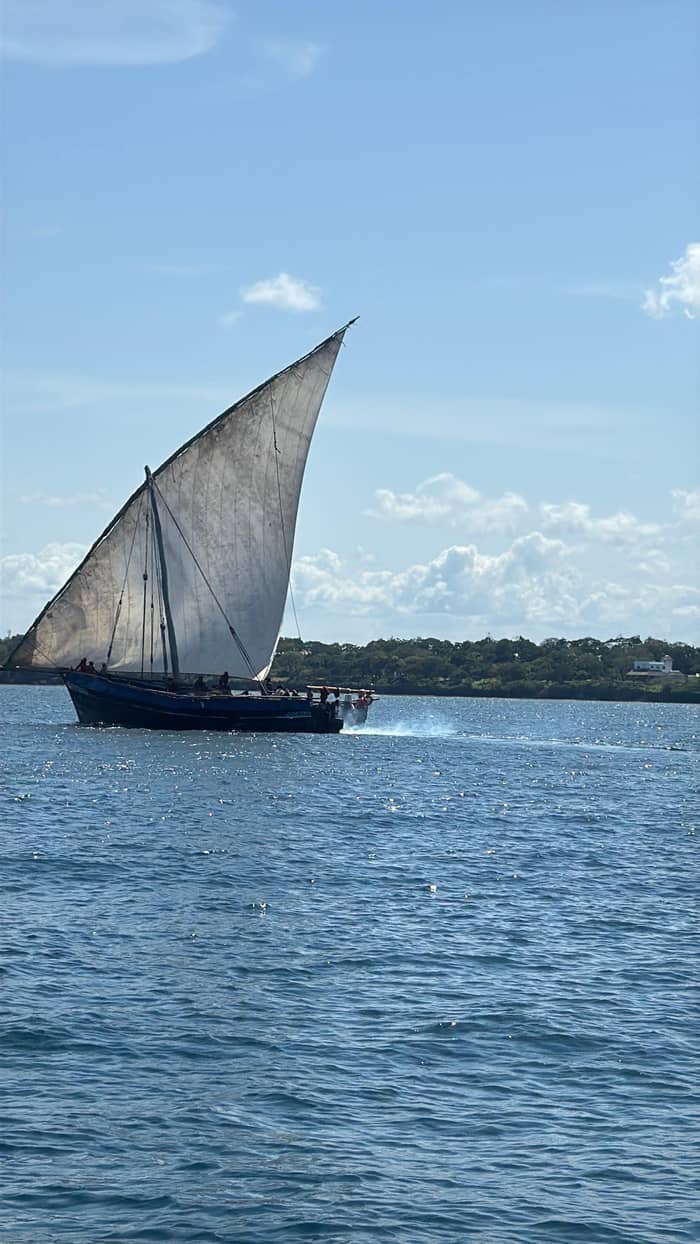
The day sold here
The dhow day sold here
The biggest review record
- LengthAbout 9 hours
- Reviews466 at 4.62
- From$92
Tick-off checklist
Fast answer
Wasini dolphins are resident bottlenose dolphins that dhow crews look for, but no day on the water can promise a sighting.
Dolphin essentials
List of 9 items
Tick off each point as you complete it. This device keeps your progress.
0 / 9 ready
Everything is ready. Only your date and your pickup point are left to choose.
Book your seatThe search for dolphins is the headline of a Wasini day. Here is who lives in these waters, when whales pass, how boats should behave and why no listing can promise a sighting.
Editorial team, wasiniislandtour.quest · Updated November 24, 2026 · 7 min of reading
Basics
The dolphins people hope to see off Wasini are mostly Indo-Pacific bottlenose dolphins. An international marine mammal task force describes a small resident population of them in the Kisite-Shimoni area, regularly the target of dolphin watching tourism and showing a high degree of site fidelity, meaning the same animals use the same waters for feeding and breeding.1
The same factsheet counts other species in the area. Endangered Indian Ocean humpback dolphins and spinner dolphins are also observed within the area year-round, and the humpback dolphin is designated Endangered on the IUCN Red List.2,5 A Wasini operator adds that humpback dolphins usually stay very close to shore or in the channel and are generally shy of boats.6
That mix is why the Wasini dolphin tours promise the animal as a group, not one pod. The resident bottlenose dolphins are the animals a dhow is usually looking for, and the other species may or may not appear on a given day. If your heart is set on one species, ask the operator what the boat usually sees, and treat the answer as experience and not as a guarantee.
Who you may meet
| Animal | When | Status or note | Source |
|---|---|---|---|
| Indo-Pacific bottlenose dolphin | Resident, all year | A small resident population, watched by tourism1 | Marine mammal task force |
| Indian Ocean humpback dolphin | Year-round | Endangered on the IUCN Red List2,5 | Marine mammal task force |
| Spinner dolphin | Year-round | Observed in the area2 | Marine mammal task force |
| Humpback whale | July to October | Calving and nursing in the habitat3 | Marine mammal task force |
| Humpback dolphin near shore | Usually close to shore | Generally shy of boats6 | A Wasini operator |
Species and seasons as the marine mammal factsheet and one Wasini operator state them; a day's sightings depend on the sea.1,6
Researchers have tried to count them. Over 551 dedicated vessel surveys between January 2006 and December 2009, they estimated the bottlenose population at between 19 and 104 individuals, with a mean of 62 dolphins.11 Between 2006 and 2012 researchers photo-identified 182 individual dolphins in and around the Kisite-Mpunguti protected area.12
Read those figures with care. They come from a research survey of a population that has been studied for years, and the older counts say nothing about the number you will see on a given morning. What they do show is that a resident group exists, and that the same animals can be recognized from one season to the next.1,11
That recognition is what makes the area valuable to scientists, and it is also what makes the pressure from boats a real question. A peer-reviewed review of marine mammals in Kenya says the rise of dolphin watching off Kenya and Tanzania is considered a factor in displacing dolphins from favored habitats and changing their behavior, and a potential threat if not regulated.13 Your choice of boat is part of the answer.
What research counted
Dolphins are not the only marine mammals that pass. Humpback whales from the Southern Hemisphere also use the habitat for calving and nursing between July and October, the same factsheet notes.3 A visit in those months may add a whale sighting to the day, though no listing here promises one. Ask your operator whether the whale months change how the crew plans the sea time.
Turtles are a possible bonus. The home listing's highlights mention watching and swimming with dolphins and turtles. Reviewers of the home tour mention a turtle, but a review describes a single day, so the safest reading is that turtles are possible and not planned, and that a turtle is never an animal to touch or chase.
Taken together, the whale months and the turtle mentions are reasons to book in the season you prefer, not reasons to expect a particular animal. The snorkeling page lists what the reef itself offers, and the park page explains who manages the water. Here the point is simple: the sea sets the program, and the best operators plan around that fact.
Pick by priority
Answer by what you want from the dolphins and see where to look.
If I want the best chance of dolphins
A day with long sea time
The private plan counts dolphin watching that lasts 1 hour, as a stated allowance.
If I want a calm, respectful boat
Ask about the code
One operator keeps boats at least 100 m away and allows no swimming with dolphins.9,14
If I hope to see whales
Travel between July and October
Humpback whales use the area for calving and nursing in those months.3
If I do not want to rely on dolphins
The glass boat near Diani
The Robinson Island trip starts from $42.
If I want to cancel if the forecast turns
Any listing here
Free cancellation applies up to 24 hours before.
Three days
The day sold here
The biggest review record
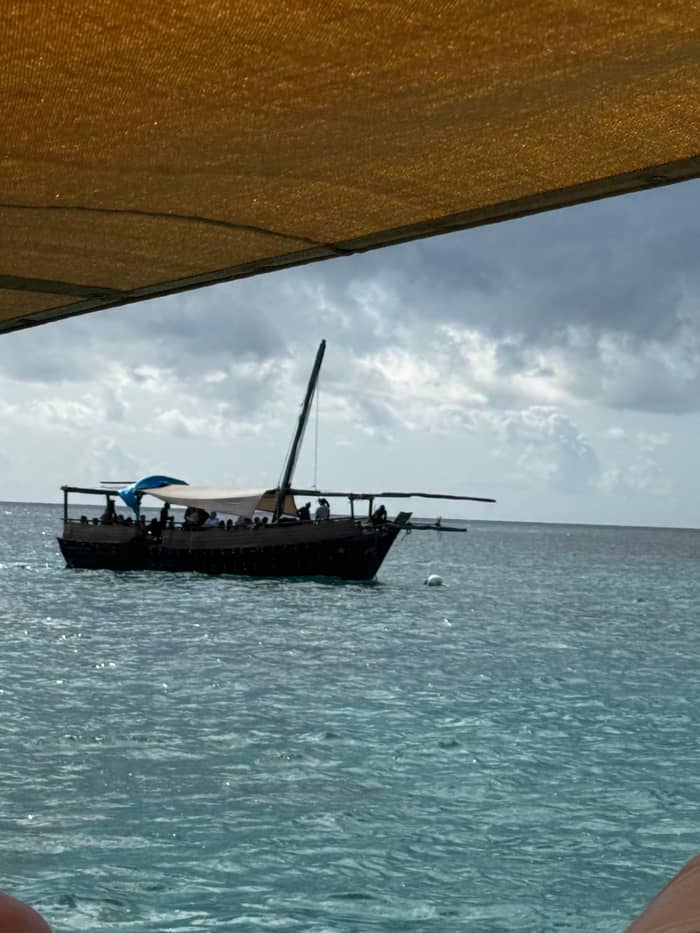
Private
1 hour of dolphin watching
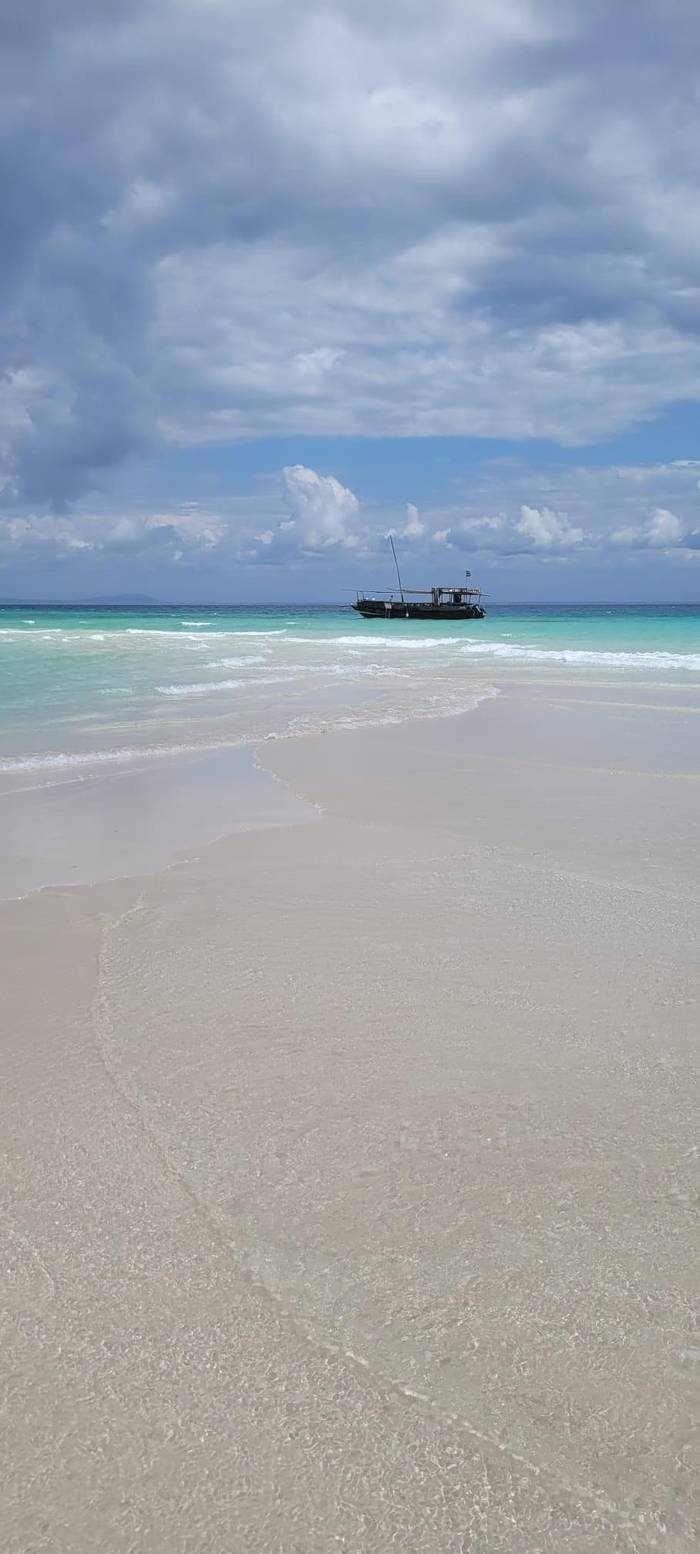
Mombasa start
Dolphins and snorkeling
The listings speak with different voices. One Mombasa listing says plainly that dolphin sightings are natural and cannot be guaranteed, and another says dolphins are often seen but not guaranteed. Others quote odds, 80% in one record and 95% in another. A percentage on a booking page is a marketing figure, not a measurement.
The day sold here sits in the middle. Its highlights mention watching and swimming with dolphins and turtles, and a Mombasa shared day lists dolphin swims among its highlights. Whether a swim with dolphins is possible is a different question from whether it is allowed, and the next section sets out the conduct rules that apply to boats.
If you want a Wasini island dolphin tour, the realistic reading is this: the dhow goes where the resident animals are usually found, the search takes a share of the sea time, and the outcome belongs to the day. A day with no dolphins still includes the reef, the sandbank when the tide allows and the lunch, so the trip does not stand or fall on one sighting.
Price your group
Set your party size and check each dolphin day's fare per person side by side.
4 options compared
Set your party size and check each dolphin day's fare per person side by side.
≈
View≈
View≈
View≈
ViewFigures are GetYourGuide from-prices, translated at the ECB reference rate. The booking step shows what you pay exactly.
A sighting, step by step
The sighting
The operator's code says to slow gradually and stay slow until clear of the animals.7
The approach
The code says not to chase, circle or steer directly at dolphins.8
The distance
The code keeps boats at least 100 m away, and the park asks for 20 meters.9,4
In the water
A snorkeler should stay calm and let dolphins approach.10
The time
Each stay with a pod is capped at 20 minutes by the code.9
The leave
The code says to move away slowly if the animals show signs of disturbance.8
The Kenya Wildlife Service's park guidelines are the baseline: keep 20 meters or more between you and wildlife, and never feed it, because feeding disrupts the diet and breeds dependence on people.4,15 The same guidelines say national parks are plastic-free and ask visitors to carry out all trash.16,17 None of these asks anything unusual of a visitor.
One Wasini operator publishes a stricter code for its own boats. When dolphins are sighted the boat slows to no-wake speed and stays slow until clear, it does not chase, circle or steer at them, and it does not drive through or between groups.7,8 At a sighting the code lets no more than 2 boats approach, keeps them at least 100 m away and caps each stay at 20 minutes.9
The code also covers swimmers. A snorkeler already in the water should stay calm and let dolphins approach, rather than approach them, and the operator does not allow passengers or crew to swim with, feed or touch dolphins and other marine animals.10,14 That sits awkwardly beside listings that mention swimming with dolphins, which is exactly why you should ask your operator how the boat behaves when a pod appears.
Video
Dennis with Lens Walks on YouTube · Video data is requested only when you tap play.
Feeding wildlife is prohibited, as it disrupts their diet and leads to human dependency.
A short list of questions separates a careful operator from a careless one. Ask how the boat approaches a pod, how many boats share a sighting, how long the boat stays and whether snorkelers are put in the water near the animals. The operator code above gives the answers a careful boat would give: slow, parallel, few boats and a time limit.7,9
Ask about the group and the vessel too. The record for the day sold here gives no group size, so the number of guests is an open question for the operator, and so is the plan for non-swimmers, because the home listing expects children to swim before they snorkel. A calm, small group is easier on the animals and easier on you.
Finally, ask what the plan is if the dolphins do not appear. Cancelling is free up to 24 hours ahead and nothing is due on booking, so the time to ask is before the day, not on the dhow. A good answer names the reef and the sandbank as the rest of the program and does not promise a second search. A calm answer is a good sign.
If dolphins are your priority, favor a day with a long sea time and a review record you can read. On price, the day sold here begins at $92 with 466 reviews at 4.6, while the private cruise begins at $160 with 198 reviews at 4.6. The private plan sets aside 1 hour to watch dolphins, an allowance and not a guarantee.
If you would rather not rely on dolphins, a glass boat trip near Diani from $42 has 108 reviews averaging 4.5 and works as a lower-stakes day on the water. It does not go to the marine park, so it is a different trip. The calculator above prices four dolphin days for your party so you can compare the whole bill.
Whichever you pick, keep the day in proportion. The dolphins are resident, the waters are managed and the guidelines are clear, and a boat that follows them is helping the animals stay in these waters.1,4 A visitor who respects the distance is helping the very thing the day is about, and that is a fair trade for a morning on the water.
FAQ
Resident bottlenose dolphins are watched here, but one listing says sightings cannot be guaranteed.1
Humpback whales use the area for calving and nursing in those months.3
The day sold here allows free cancellation up to 24 hours in advance for a full refund.
Sources
Planning a dhow day to Wasini? Ask a real person here.